
Compare St. Clair County Property Values
Michigan assessment records sit several distinct value concepts beside one parcel. Read the field label and its year first. State equalized value, usually called SEV, comes from Michigan's assessment framework. Taxable value is a different tax-base figure. A recorded sale price, in turn, describes a single transfer shaped by its deed and sale type. Compare these values only with their labels straight.
| Value | What It Is | Where |
|---|---|---|
| Assessed value or SEV | Michigan assessment figure set at 50 percent of true cash value | Assessment roll and county parcel detail |
| Taxable value | Separate figure used in the property-tax calculation | Assessment and tax record |
| Building assessment | Improvement component displayed on the county sample | County parcel detail |
| Recorded sale price | Consideration reported for a particular transfer | Sales history and recorded deed |
Michigan assesses at a 50 percent level. Yet doubling an SEV will not reliably produce a sale price. True cash value is an assessment concept, and markets move between valuation dates. Taxable value can diverge from SEV as well. Proposal A limits and transfer uncapping steer its path. Keep each number in its own lane.
St. Clair County Value Fields
The county parcel detail record shows a specific set of fields. It is not one generic property value. Expect SEV year and amount. Also expect a building assessment, tax year, tax amount or taxable-related data, homestead percentage, a legal description, and a sales list. Sale rows can carry date, type, price, grantor, grantee, and liber/page references. Copy the label exactly. Renaming SEV as taxable value garbles the data. Treating a building assessment as the whole parcel does the same. The year is part of the fact itself. A 2026 assessment figure and a 2014 sale price measure different events. The gap matters. Open the county parcel-detail sample to view these fields on a live record.
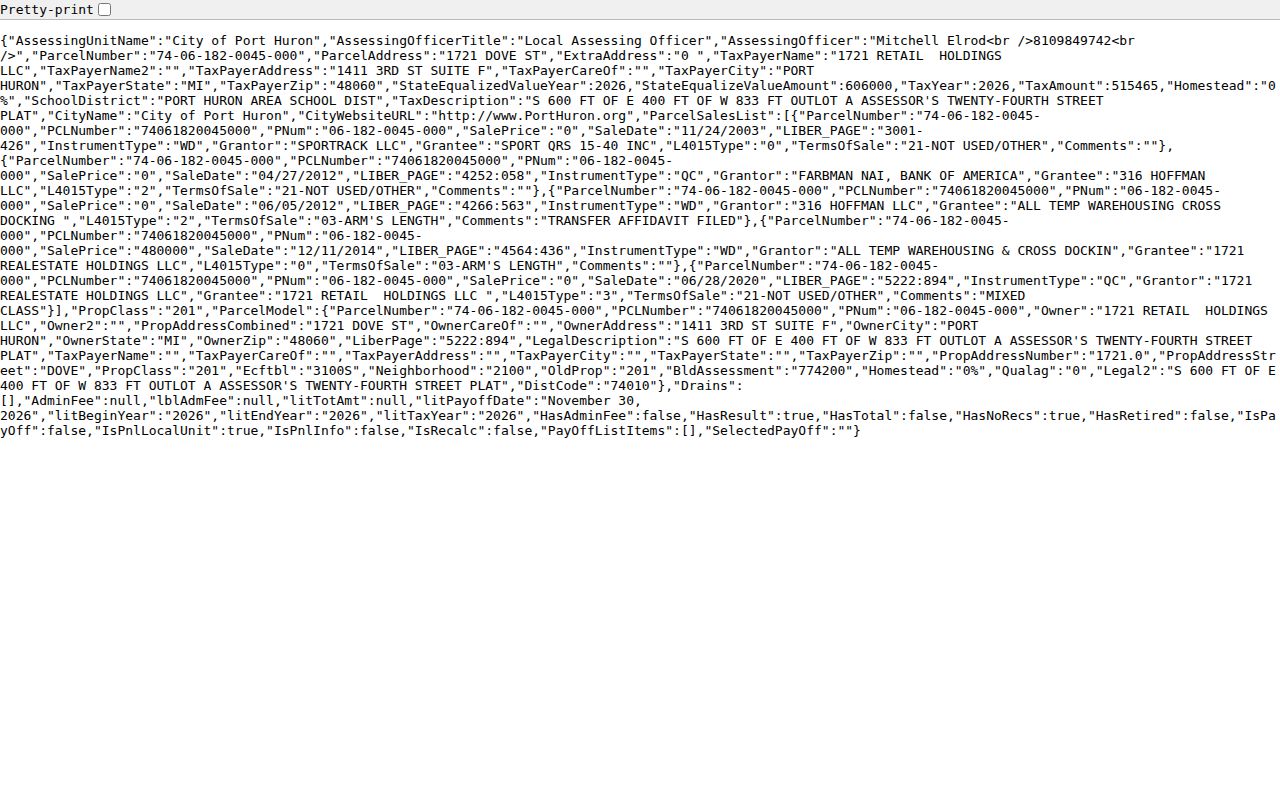
The official record displays the parcel-specific value, legal, owner, and transfer fields that must stay distinct.
Michigan SEV and True Cash Value
Michigan law frames assessed value and SEV at 50 percent of true cash value. SEV reflects equalization after local assessment. It is neither taxable value nor a licensed appraisal for a transaction.
Value terms: Assessed value is the local figure. SEV is the equalized figure, true cash value is Michigan's market-value concept, and taxable value is the separate amount used to calculate the tax bill.
For a rough relationship, view an SEV against the statutory assessment level. Property condition, valuation date, exemptions, classification, and market evidence still shape the answer. Cite the roll field as written without turning it into an asking price.
Taxable Value Follows Another Track
Taxable value often trails SEV because Proposal A limits annual growth, subject to legal adjustments. A transfer can uncap taxable value in the calendar year after it occurs. Not every sale row produces a matching taxable value right away. Check the transfer date, property transfer affidavit context, exemption status, and the following assessment year. A quitclaim deed or related-entity event may demand more analysis than a simple price comparison. Bills, millage, and appeals belong to the property-tax discussion. Here the point is what each value means.
Note: SEV and taxable value may differ for lawful reasons even on the same parcel record.
Find a St. Clair County Property Value
The Property Tax & Maps Search takes an owner name, street number, street name, or parcel number. Use one mode at a time. An address search finds the parcel, and the detail record supplies the valuation fields with their years.
- Search the address and verify the situs, APN, and assessing unit.
- Record the SEV, taxable value, building assessment, exemptions, and year.
- Read each sale row’s date, price, transfer type, and parties.
- Use the liber/page to confirm the transfer in the recorded deed index.
- Assessment year
- The year to which a roll value applies.
- Sale type
- The record’s classification of a transfer, which affects how price evidence should be read.
- Liber and page
- The recorded book and page reference used to retrieve the supporting instrument.
Read St. Clair County Sale History
A sale row is evidence of a recorded event, not a current appraisal. The county's 1721 Dove Street sample lists transfers from 2003 through 2020. It mixes warranty-deed and quitclaim entries. One 2014 row carries a sale price. The 2020 quitclaim sits in a different transfer context. WD usually denotes a warranty deed and QC a quitclaim deed. A zero or missing price does not mean nothing changed. It may reflect a related-party transfer, an entity change, an affidavit, or a non-arm's-length transaction. It may simply be a field the source left blank. Open the deed before treating the price as market evidence.
Liber and page references build the cross-check. Search that reference in the St. Clair County Register of Deeds records. Identify the grantor and grantee, and compare the legal description against the parcel card. A matching address alone is weaker evidence, since mailing and situs fields can differ. Keep the recording date apart from the sale date when both appear. This work does not convert an old consideration amount into a present property value. It establishes what the recorded transfer reported and which deed supports it. It also shows whether the same parcel identity carried through the event.
2026 County Equalization Context
St. Clair County's 2026 Equalization Report puts total equalized value at $12,426,680,232. The 2025 figure was $11,612,570,293. That is a 7.01 percent jump. Industrial facilities tax abatement and Department of Natural Resources value are left out of the total.
Keep the scope in mind. The number is countywide, rolled across property classes and local units, so it does not mean every St. Clair County property value climbed 7.01 percent. Port Huron waterfront property, Marysville riverfront parcels, St. Clair condominium units, industrial sites, and inland acreage can all move at their own pace. For an actual assessment, pull the individual parcel record rather than the countywide total. View the St. Clair County Equalization report page for the full document.
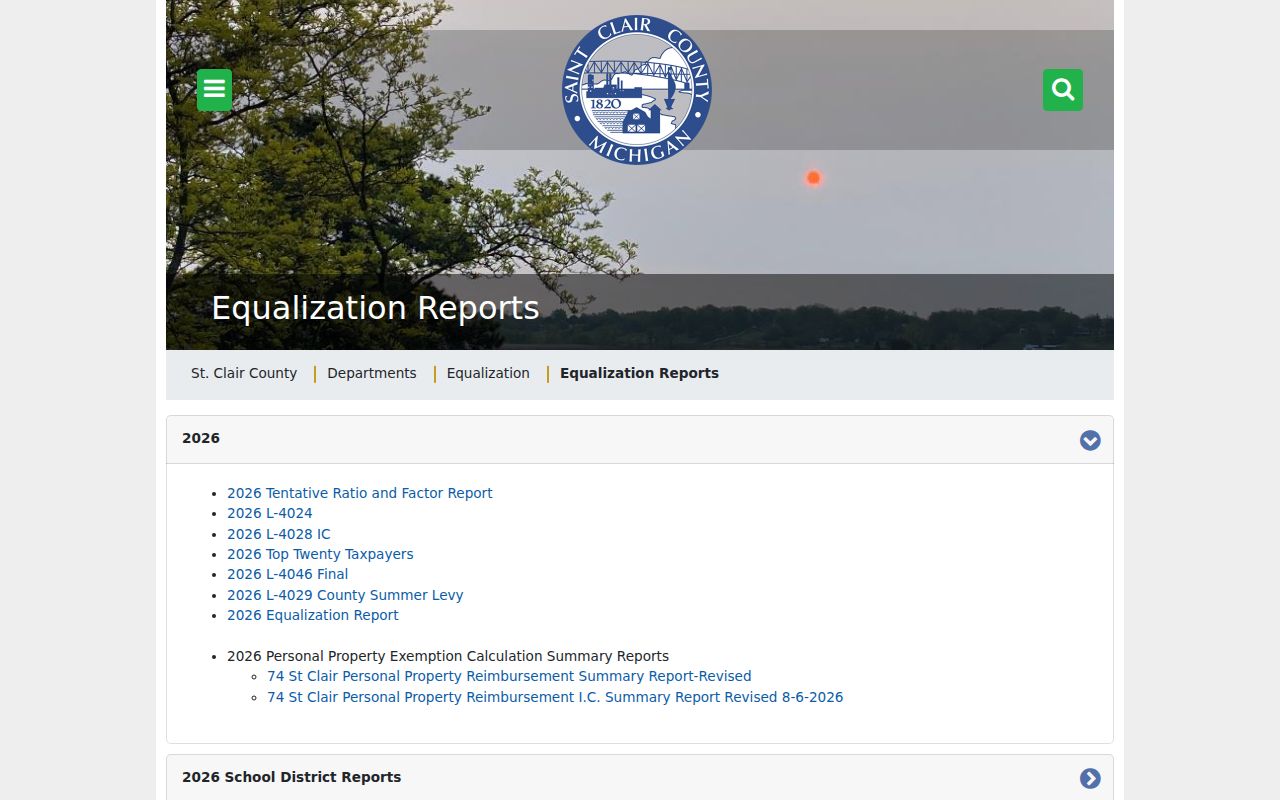
The Equalization Report gives broad annual context for property values across St. Clair County. For any single property's fields, the parcel card is the source.
Homestead Flags Need Care
A zero-percent homestead field appears on the sample parcel detail. Treat it as what it is. It is an assessment and exemption entry. It is not evidence that a building sits empty or that the owner of record lives somewhere else. Principal Residence Exemption status exists for a tax purpose. It only means something for the year stated.
Mailing address and situs also diverge. In the Dove example, the LLC taxpayer gets mail at a 3rd Street suite. The parcel itself sits on Dove Street. Neither the mailing address nor the exemption percentage tells you who occupies the property now. Keep any property value analysis inside the public assessment facts.
Local Units Shape Property Values
St. Clair County's parcel system stretches across cities, townships, and other assessing units. APN prefixes sort them out. Port Huron uses 74-06, St. Clair uses 74-07, Port Huron Township uses 74-28, and St. Clair Township uses 74-30. Marysville parcel samples begin with 74-03.
Compare parcels inside the right assessing unit, property class, and valuation year. A postal city never settles jurisdiction. City permits, historic review, industrial exemption districts, splits, and condominium documents can add context, but none of them replaces the tax roll's value fields or a market appraisal.
Splits Complicate Value Comparisons
Parcel identities can shift. The GIS "Best Known with Splits for 2026" layer shows it, and so does the county split packet. Split and combination processing pauses from March through May. New IDs post on a periodic schedule. A parent parcel's old sale price may not carry over cleanly. Its old value may not reach each child parcel either.
Record the current and parent APNs, acreage, legal description, assessment year, and inspection date. Check the deed and survey. Do this before treating an older price as the value of a new configuration. Watch for this timing gap. The GIS map, tax roll, and recorded land documents can seem out of sync. Note: A changed parcel number can break a simple year-to-year comparison even when the land sits in the same spot.
Limits of St. Clair County Values
A St. Clair County assessor value comes from a mass-assessment system. It is not a title opinion, boundary survey, current offer, guaranteed sale price, or parcel-specific appraisal. The last sale may be old or non-arm's-length. Countywide equalization can also move differently than a single class or neighborhood.
Value versus price. A recorded St. Clair County property value does not predict the amount a buyer will pay. Use a qualified appraisal and current market evidence when a present market conclusion is required.